
Guide
Patio materials compared: sandstone, granite and porcelain
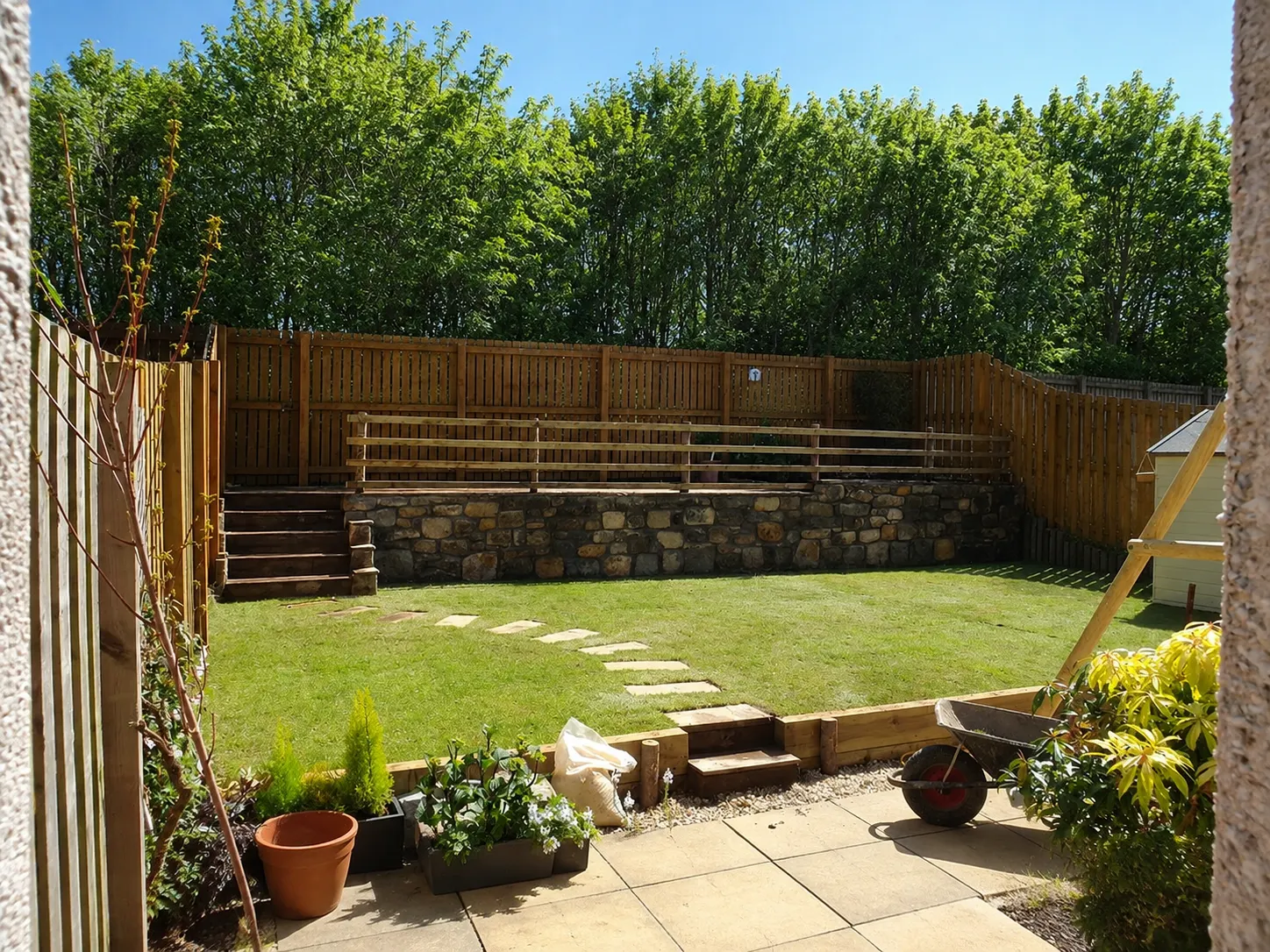
Sandstone is warm in colour, easy to work and the most forgiving underfoot, but it is porous and needs cleaning. Granite is dense, very hard-wearing and holds its colour. Porcelain is low maintenance and consistent, though it needs a primed slurry bed and precise laying. All three work in Scotland if drainage is right.
Which handles Scottish weather best?
All three cope with frost when laid on a proper base. The real difference is surface. Porcelain and riven sandstone with a textured face give better grip in wet weather than a smooth polished finish.
What about algae and green growth?
Shaded, damp gardens grow algae on any surface. Porcelain sheds it most easily. Sandstone holds more moisture and benefits from an occasional wash.
Does porcelain need special laying?
Yes. Porcelain has almost no porosity, so slabs are laid on a full mortar bed with a slurry primer on the back. Skipping that step is the usual cause of loose slabs.
Which is the hardest wearing?
Granite. It resists scratching and staining, keeps its colour, and copes well with heavy use and driveway edges.
Does the base matter more than the slab?
Usually, yes. A well-compacted sub-base, correct falls and a route for water away from the house matter more to how a patio ages than the material on top.
What about matching the house?
In Edinburgh, warm buff sandstone often sits comfortably against traditional stone. Grey granite and mid-grey porcelain suit newer render and modern extensions.
How Carpathian Craft can help
We lay patios, paths and garden walls across Edinburgh and about 20 miles around it, base included.
We give a free, no-obligation written quote. The price we quote is the price you pay.