
Guide
Choosing flooring for an Edinburgh tenement flat
Tenement flooring has three constraints: noise to the flat below, an old timber subfloor that is rarely level, and title deed conditions that sometimes require carpet or underlay. LVT, engineered wood and good laminate all work if the subfloor is prepared properly and acoustic underlay is used where needed.
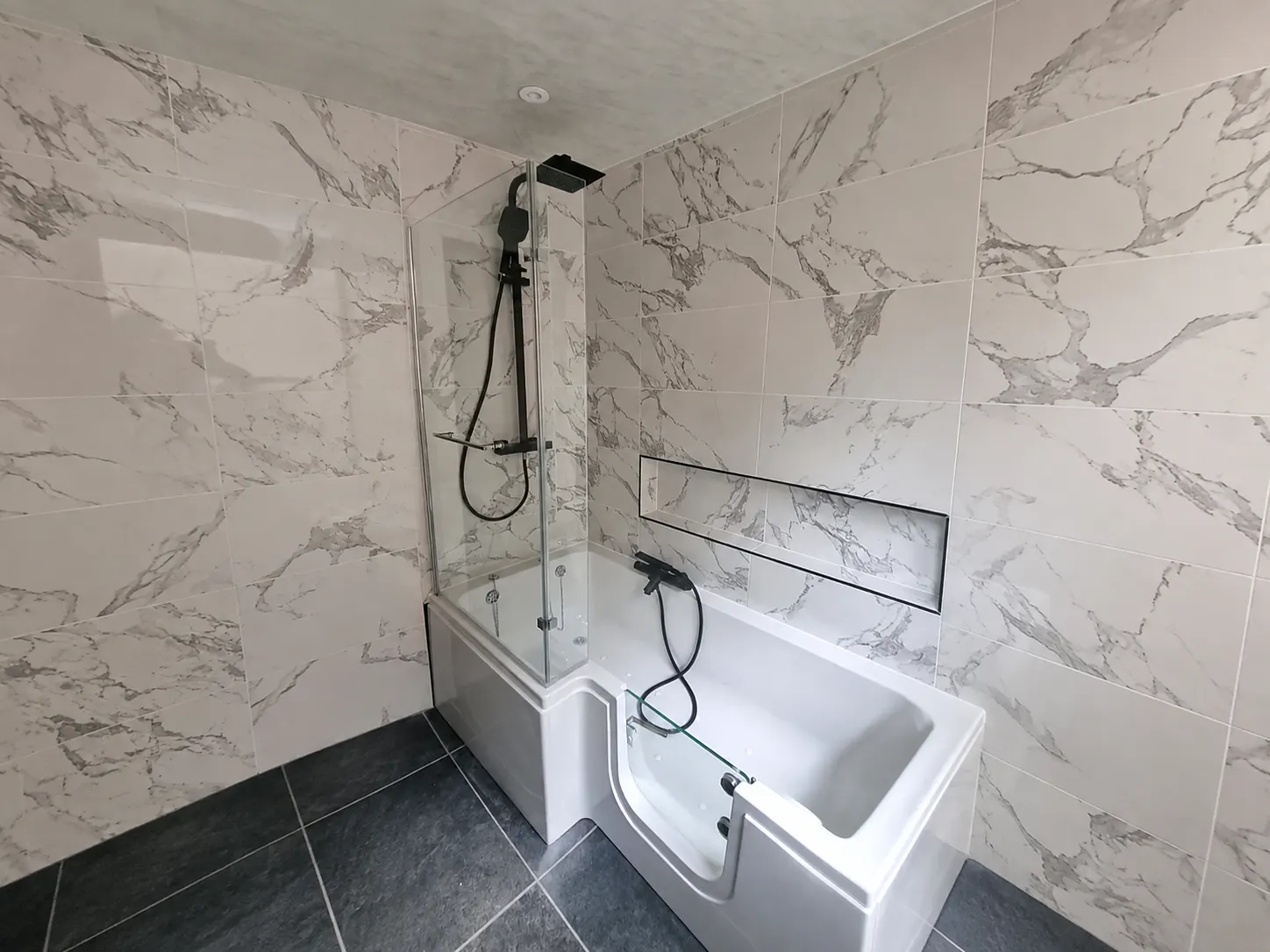
Why is sound the first question?
Hard floors carry footfall straight into the ceiling below. Acoustic underlay reduces it. Some tenement title deeds set conditions about floor coverings, so read them before choosing.
What about the subfloor?
Original tenement floors are usually timber boards on joists, often uneven and sometimes springy. Overboarding with ply, or levelling first, is what stops a new floor creaking or lifting.
Which materials suit a tenement?
Each has a place.
- LVT: hard-wearing, warm underfoot, good in kitchens and hallways.
- Engineered wood: real timber surface, more stable than solid boards.
- Laminate: cost-effective, needs a good underlay for sound.
- Tile: right for bathrooms, but heavy and needs a rigid base.
- Restored original boards: sympathetic, though sound transfer stays higher.
Can I tile a timber floor?
Only with the right build-up. The floor must be stiffened and prepared so it does not flex, otherwise grout and tiles crack.
Does underfloor heating work?
Electric mats work under tile and some LVT in a bathroom or kitchen. Build-up height and the subfloor decide whether it is practical.
What about getting materials up the stair?
Common stairs are shared, so deliveries and waste need planning. We protect the stair and clear our waste rather than leaving it in the close.
How Carpathian Craft can help
We fit flooring in flats across Edinburgh, including subfloor preparation and levelling before anything is laid.
We give a free, no-obligation written quote. The price we quote is the price you pay.